Table of Contents
- Defining Trucking Spot Rates and Contract Rates
- Why 2025 Was Another Challenging Year for Trucking
- Christmas Came Early for Trucking
- Why is Freight So Slow for Some Sectors?
- Key Trends Shaping the Year Ahead: Capacity and Regulation
- The Rise of the El Paso Corridor and Cross-Border Freight
- The Beverage Perspective: Navigating LTL and Future Specialization
- Strategic Solutions: From Action Items to the Pallet Parka
- FAQs About North America Freight Demand
- Key Takeaways
- Your Partner Through Market Transitions


Freight Market Updates: What Beverage Shippers Need to Know
Published Date: 18 February 2026
Stay ahead of the 2026 freight market. Our latest freight market updates cover trucking industry trends, shifting trucking spot rates, and how rising freight demand and logistics industry trends across North America will impact your beverage shipping and supply chain.
The start of 2026 marks a definitive turning point for the North American logistics landscape. After three years of a historic freight recession that began in 2022, the trucking market is finally showing signs of life, and craft beverage shippers need to pay attention.
For beverage company owners, from local breweries and distilleries to large-scale soda and kombucha producers, these shifts are not just industry news; they’re critical factors for your 2026 business planning.
In late 2025, we saw trucking spot rates and tender rejection rates spike to multi-year highs. This signals that the period of “purgatory,” characterized by low rates and excess capacity, is coming to an end.
Understanding these freight market updates is essential for protecting your margins and ensuring your product actually reaches the shelf.
Defining Trucking Spot Rates and Contract Rates
Before we dive right in, let’s define terms first. Beverage producers must understand the differences between spot and contract rates to stay ahead.
- Trucking spot rates are the “on-the-spot” prices for a single shipment, often fluctuating with supply and demand. In late 2025, spot rates climbed 18.9% in just six weeks, climbing from $2.32 per mile to $2.76 per mile. That kind of volatility can quickly impact shipping budgets, especially for temperature-controlled freight.
- Contract rates are the long-term prices negotiated between shippers and carriers. They provide more predictable pricing and capacity, but typically lag behind shifts in the spot market. As spot rates rise, contract rates tend to follow, with a projected year-over-year increase of four to six percent.
These shifts did not happen in a vacuum. To understand why rates moved the way they did, let’s look at the broader pressures carriers faced in 2025.
Why 2025 Was Another Challenging Year for Trucking
Throughout 2025, the industry was in suspended animation. While it didn’t collapse further, it didn’t recover either. This was largely due to soft consumer spending and a weak housing market. Truck transportation jobs fell to their lowest levels since 2021, with only 1,509,600 jobs recorded in November 2025.
The freight recession extended longer than most experts expected due to trade policy uncertainty and the impact of tariffs. Low freight volumes were the norm, and truckload tender volumes averaged five to 10% lower year-over-year through most of 2025.
Approximately 50,000 carrier authorities have been revoked since early 2023 as capacity has continued to exit the market. When fewer trucks are available to move the same amount of goods, the power shifts back to the transportation providers.
For the trucking industry, it felt like waiting for a recovery that was always just six months away.

Image source: Canva
Christmas Came Early for Trucking
The late 2025 market surge was a clear inflection point. In mid-December, the SONAR Truckload Rejection Index (STRI) surpassed 9.5%, a level not seen in the previous year’s peak. This signaled that capacity was tightening rapidly. Tender rejection rates spiked from under six percent before Thanksgiving to over 10.72% by mid-month.
Trucking spot rates mirrored this volatility, climbing 18.9% from November 15 ($2.32/mile) to December 28 ($2.76/mile).
As Zach Strickland of FreightWaves noted: “This market feels like it has been on this tightened coil and continues to get really wound tighter for a long period of time”. This unusual behavior suggests that the typical post-holiday lull is a thing of the past.
Why is Freight So Slow for Some Sectors?
While the overall market is tightening, some sectors still feel slow.
This is often due to mixed demand signals. Some retailers are cautious about an inventory reload after the holidays, and certain consumption trends are shifting.
However, sectors like housing construction are beginning to improve. Each new home built represents approximately eight truckloads of freight, which pulls capacity away from consumer goods.
Key Trends Shaping the Year Ahead: Capacity and Regulation
Regulatory pressures are accelerating carrier exits in 2026. We’re closely monitoring the Department of Labor (DOL) and its “Final Rule” on independent contractor status, as well as Supreme Court activity on labor markets.
Furthermore, the Federal Motor Carrier Safety Administration (FMCSA) has increased enforcement of English language proficiency and non-domiciled CDL requirements. These crackdowns could effectively remove 10-15% of industry capacity.
For beverage shippers, this means a shift away from the bargain-basement pricing of the last few years, and your go-to local driver might suddenly be sidelined by new federal standards.
Experts have revised 2026 spot rate forecasts upward to a six percent year-over-year increase. While Q1 rates may decline from December highs, they’re not expected to drop as steeply as they did in 2024 or 2025.

Image source: Canva
The Rise of the El Paso Corridor and Cross-Border Freight
Mexico cross-border freight remains a major growth area for North American supply chains.
Cross-border truck freight rose more than 10% in early 2025, and this momentum is carrying into 2026. The El Paso corridor has emerged as a vital gateway, particularly for high-tech and specialized manufacturing.
The state of Chihuahua, located directly across from El Paso, saw its export value surge 35.7% to nearly $47.6 billion in Q2 2025. Major logistics players like C.H. Robinson responded by adding 450,000 square feet of warehousing and cross-docking space in El Paso to manage this volume.
For beverage producers moving product or equipment through these regions, this boom means competing with high-value tech and automotive freight for trailer space.
The Beverage Perspective: Navigating LTL and Future Specialization
LTL Industry Trends and Mode Optimization
Since the closure of Yellow Corp in 2023, the LTL (Less-than-Truckload) market has remained exceptionally firm. While the truckload sector dealt with massive overcapacity, LTL carriers maintained “pricing discipline.”
As we move through 2026, LTL tonnage is expected to grow, particularly in the second half of the year. As the truckload market tightens and rates rise, many shippers will likely shift smaller volumes back to LTL to manage costs.
However, you should expect mid-single-digit rate increases of roughly five percent as carriers face elevated fuel and labor costs.
For a brewery, this means consolidating smaller orders into a single LTL shipment is still a viable strategy, provided you account for higher base rates.
The Future of the Trucking Industry
For the craft beverage world, the future of the trucking industry involves a shift toward higher technology and deeper specialization.
Shipping alcohol is not a standard “dry goods” operation; it requires specialized equipment and a precise understanding of the red tape involved in alcohol logistics.
As capacity tightens, “routing guides”, the prioritized lists of carriers a company uses, will fail more frequently. When your primary carrier says “no” because they found a higher-paying load elsewhere, you cannot afford to have your kegs or ingredients sitting on a dock.
The future belongs to “shippers of choice” who use real-time tracking and flexible logistics partners like Brew Movers to pivot between modes and maintain service levels.
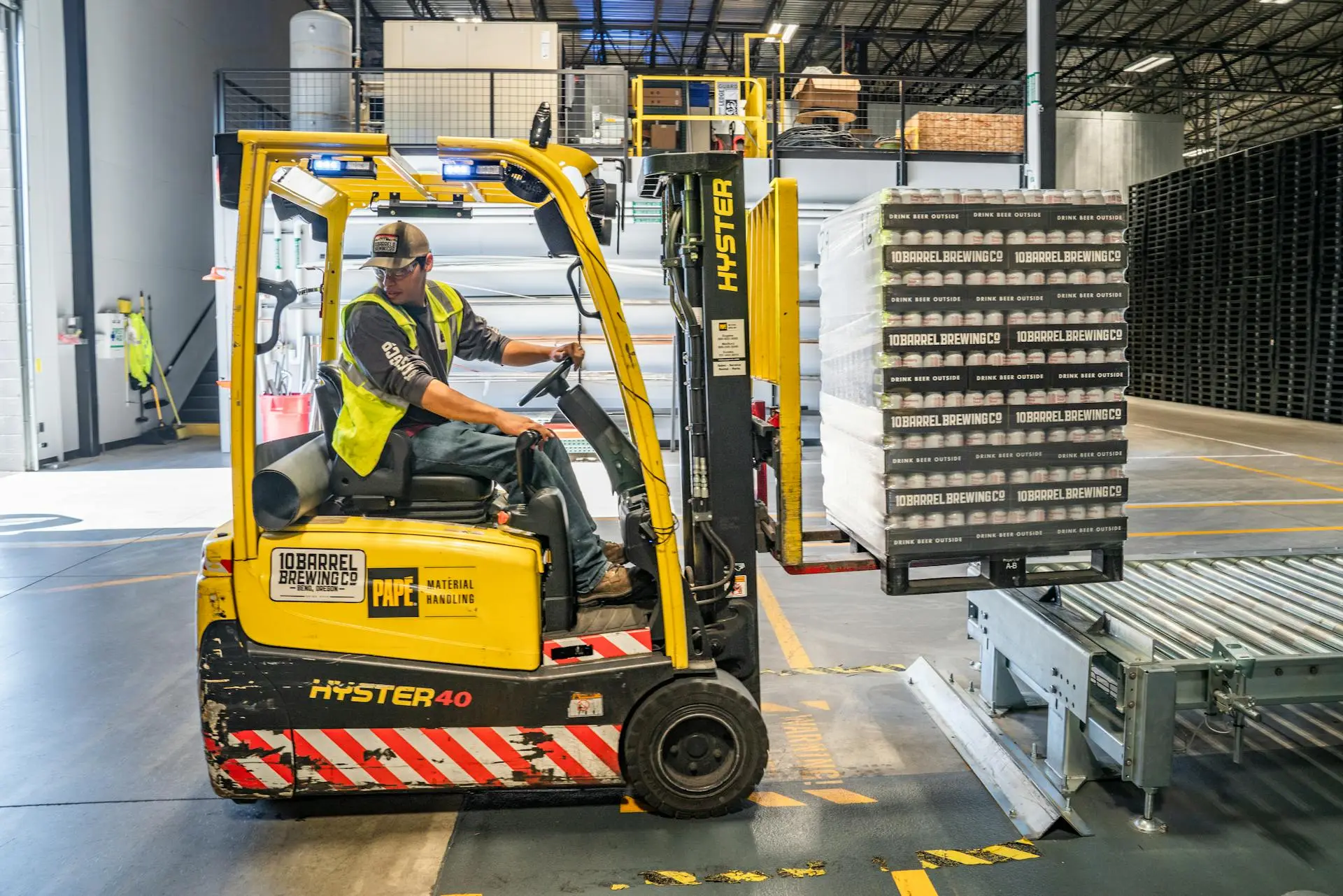
Image Source: Pexels
Strategic Solutions: From Action Items to the Pallet Parka
The tightening market means beverage shippers can no longer rely on just-in-time inventory strategies. As capacity becomes harder to secure, regional disparities are also growing.
Southeast markets are experiencing tighter capacity than the West Coast, while major craft-beverage clusters like those in the Pacific Northwest face unique local conditions.
To keep up with the changes, adapt the following strategies:
- Lock in contracts early: Do not wait for the summer peak to negotiate your rates.
- Plan for lead times: Increase your planning horizon for long-haul shipments to avoid routing guide failures.
- Audit your supply chain: Look for opportunities to consolidate LTL shipments into full truckloads (FTL) where possible.
- Protect your product: Use our proprietary Pallet Parka solution to ship temperature-sensitive beverages in a standard dry van. This allows you to tap into a much larger pool of available trucks while bypassing the high costs and limited availability of reefer freight.
FAQs About North America Freight Demand