Table of Contents
- The Macroeconomic Ripple Effect: Federal Reserve and PCE Prices
- Historical Context: Steel, Aluminum, and the Trade War
- What Products Will Be Impacted by Tariffs?
- Specific Logistics Impacts: Beyond the Tariff Rates
- The Cost of Global Trade: Higher Retail Prices for Consumers
- Strategic Logistics: Navigating the Supply Chain
- FAQs About Import Prices and the Global Economy
- Key Takeaways
- Resilience in a Volatile Market


What Will Tariffs Impact? How They’re Reshaping Beverage Ingredient Costs
Published Date: 08 April 2026
What will tariffs impact across your supply chain? Understanding which products will be affected by tariffs is crucial, as new tariffs raise prices. Brew Movers helps you navigate food and beverage trade tariffs while protecting your margins from increased market volatility.
The first quarter of 2026 has added new challenges for the craft beverage industry. Brewery, distillery, and soda owners now face more questions than recipes. Many are focused on changing international trade rules. The main question is simple: What will tariffs impact next?
At Brew Movers, we help you navigate the “red tape” of international trade. We understand that you’re not just making a product; you’re managing a business in a global economy.
Today, we’re analyzing what products will be impacted by tariffs and how your logistics strategy can adapt to this trade war.
The Macroeconomic Ripple Effect: Federal Reserve and PCE Prices
To understand the current situation, we must look at the broader US economy. The Federal Reserve Board is closely monitoring the impact of new tariffs on inflation. One of the key metrics the Federal Reserve Bank uses to gauge the health of the economy is PCE prices (Personal Consumption Expenditures).
When the US government decides to authorize or impose tariffs on imported goods, the result is often a sharp increase in the average effective tariff rate. As these costs rise, they inevitably push consumer prices higher.
For a brewery owner, this means that food and beverage trade tariffs directly cause increased market volatility; they are not just an abstract political issue.
If PCE prices continue to rise due to taxes on goods imported from our major trading partners, the Federal Reserve may be forced to raise interest rates to curb inflation. This creates a cycle in which higher tariffs lead to higher raw-material prices, which, in turn, affect the industry’s overall economic growth.
Are these tariffs legal?
In early 2026, the Supreme Court addressed the legality of certain IEEPA tariffs, which are taxes imposed under the International Emergency Economic Powers Act. While some experts argue the legality of these tariffs, the US government has continued to authorize IEEPA tariffs to protect domestic producers.
If the Supreme Court rules that certain tariffs are unlawful, it could lead to a temporary pause in higher tariffs, providing much-needed relief to the industry.
Historical Context: Steel, Aluminum, and the Trade War
The roots of today’s trade tensions lie in significant shifts in international trade policy regarding raw materials. Specifically, the imposition of steel tariffs and aluminum tariffs in previous years created a foundational shift for North American manufacturers.
During previous trade negotiations, retaliatory tariffs from trading partners often exacerbated the trade deficit. This trade policy history shows that such tariffs rarely exist in a vacuum; they almost always invite foreign retaliation.
When a trade war begins, it often starts with protective measures on metals, but it quickly spreads to finished goods and ingredients.
For beverage producers, this meant that what started as a tax on the metal used for brewing tanks eventually morphed into a broader conflict affecting everything from glass bottles to fruit concentrates.
These historical retaliatory tariffs taught the industry that global supply chains are deeply interconnected. By understanding this history, beverage stakeholders can better prepare for how current trade practices might influence future import prices.
Learn more: Freight Market Updates: What Beverage Shippers Need to Know

Image Source: Pexels
What Products Will Be Impacted by Tariffs?
Identifying the vulnerabilities in your supply chain is the first step toward mitigation. The current trade environment has seen a variety of tariff rates applied to essential beverage components.
Aluminum and Steel Packaging
Packaging remains the most vulnerable sector. Aluminum tariffs and steel tariffs continue to raise prices for cans and kegs. Even after recent trade negotiations, imported aluminum can face a combination of Section 301 and Section 232 duties that reach up to 80%.
These taxes imposed on imported goods have pushed retail prices higher, forcing many soda and beer producers to reconsider their packaging mix.
Malt, Barley, and Canadian Imports
Many producers rely on Canadian imports for high-quality malt and barley.
Recent shifts in trade policy have led to fluctuations in average tariff rates on these goods, raising the cost of a standard truckload of grain. When trading partners engage in a trade war, retaliatory tariffs often target agricultural products.
This means your pilsner malt or specialty hops could be subject to reciprocal tariff rates that significantly raise prices.
Specialized Brewing Equipment
It’s not only about what goes into the beverage, but also about the brewery equipment used to make it.
Much of the high-quality stainless steel brewing equipment used in North America is manufactured in Europe or Asia. Steel and other tariffs on manufactured goods are raising the cost of new fermenters and bright tanks, potentially stifling business investment and slowing expansion plans.
Hops and Specialty Ingredients
While the U.S. is a major producer of hops, many popular varieties used in hazy IPAs or traditional lagers come from Germany, New Zealand, or Australia. Additionally, producers of flavored sodas, kombuchas, and fruited sours often rely on fruit purees and concentrates from Mexico and South America.
These ingredients are all subject to the new 15% global surcharge, meaning that your “exotic” seasonal release just became significantly more expensive to produce.
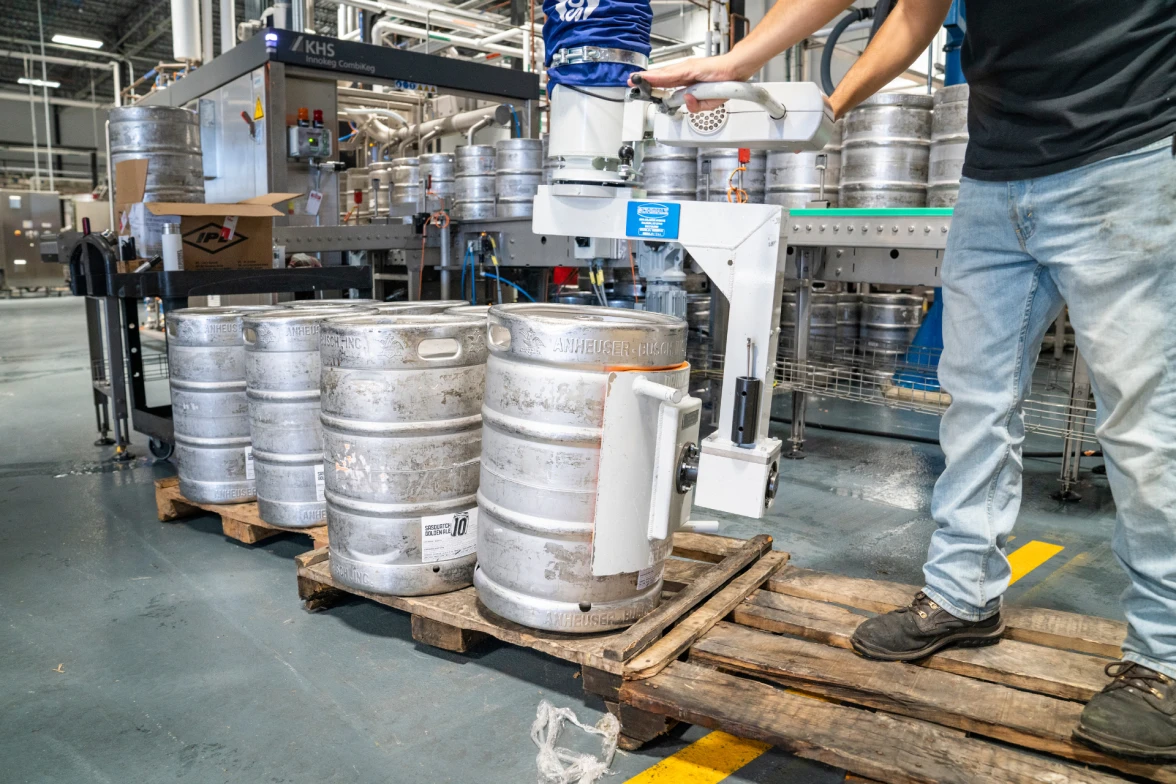
Image source: Canva
Specific Logistics Impacts: Beyond the Tariff Rates
Beyond the actual tariff rates, beverage owners must navigate rising port fees and increased market volatility. Even a strong US dollar cannot fully offset the higher costs of goods imported through a strained supply chain.
These factors create a ripple effect that significantly impacts the labor market, as businesses are often forced to choose between expanding their teams or covering rising operational expenses.
Managing these details is exactly where the “logistical headache” begins for most producers. When port fees fluctuate, greater oversight is required to ensure your freight arrives on time and within budget.
At Brew Movers, we provide the craft beverage industry with a white-glove shipping service that handles these variables. We manage the complexities of the global supply chain so you can focus on your product.
The Cost of Global Trade: Higher Retail Prices for Consumers
The goal of many new tariffs is to increase tariff revenue and reduce the trade deficit; however, the immediate effect is often higher consumer prices. As import prices rise, American consumers eventually feel the squeeze at the checkout counter.
For beverage brands, this creates a difficult choice: absorb the higher costs and reduce business investment, or pass the price hike on to the customer.
This cycle of tariff hikes and foreign retaliation can stifle economic growth and disrupt the hospitality sector’s labor market.
Strategic Logistics: Navigating the Supply Chain
While you can’t control the decisions of the Federal Reserve Bank or the Supreme Court, you can control your supply chain efficiency.
Managing the logistical headaches associated with transporting beverages requires a proactive approach.
1. Diversifying Your Sourcing
To mitigate the impact of such tariffs, many companies are seeking domestic producers to avoid complications with international trade. By shortening your supply chain, you reduce your exposure to sudden tariff policy changes and increased market volatility.
2. Using the Pallet Parka to Offset Costs
Temperature-controlled shipping is often one of your highest expenses. Our proprietary Pallet Parka insulation system lets you bypass the expense of chilled chain transport.
By using a Pallet Parka, you can ship sensitive ingredients via standard dry van, saving enough on freight to help offset new tariffs on those ingredients.
3. Use Data-Driven Logistics
In a market characterized by increased market volatility, data is your best friend. Use reports and economic research to stay ahead of tariff hikes. Partnering with a logistics provider that understands the nuances of the Federal Reserve Bank’s reports on PCE prices can give you a competitive edge.
FAQs About Import Prices and the Global Economy