Table of Contents
- Why RTD and Canned Cocktails Are Having a Moment
- What are Regulations on Shipping Canned Cocktails?
- Why Ready-to-Drink Cocktails Need Cold-Chain Shipping
- Getting Your Canned Cocktail Supply Chain Right From Day One
- Pallet Parka and Cold Chain Shipping for Canned Cocktails
- Scaling Logistics as Your Brand Grows
- FAQs About Canned Cocktails & Ready-to-Drink Beverages
- Key Takeaways
- Build Your Logistics Foundation Before You Need It


Canned Cocktails & RTD Beverages: Considerations for Emerging Brands
Published Date: 03 June 2026
The canned cocktail and ready-to-drink (RTD) beverage markets are growing fast, but scaling a beverage brand takes more than great flavour and standout packaging. From cold-chain shipping to alcohol compliance and co-packer coordination, the right logistics strategy can help protect product quality, reduce costly delays, and keep your cans moving as demand grows.
Ready-to-drink (RTD) beverages are among the fastest-growing beverage categories worldwide, led by hard seltzers, canned cocktails, spirit-based RTDs, and canned wine.
If you’re building or scaling a brand, the logistics of shipping these cocktails can make or break your momentum. Understanding what’s involved early gives you a serious competitive edge.
Why RTD and Canned Cocktails Are Having a Moment
Consumer demand has shifted. People want convenience, quality, and variety, and the canned cocktails category delivers all three in a format that travels well and does not require a skilled bartender.
Spirit-based cocktails have seen explosive growth, driven by the appeal of a well-made drink anytime, anywhere. Classic styles like a canned margarita, a mojito, a Moscow mule, or whiskey cocktails have gone from novelty to staple across bars and retail shelves.
For beverage entrepreneurs, this creates an opportunity to push into new markets. But a canned margarita or martini involves a more complex operational picture than launching a simple coffee brand.
Whether you’re producing canned margaritas or canned martinis, your cocktail lineup requires a balanced approach to logistics.
What are Regulations on Shipping Canned Cocktails?
Spirit-based canned cocktails fall under different regulatory frameworks than beer or wine. Depending on the base alcohol, your canned cocktails may be subject to Alcohol and Tobacco Tax and Trade Bureau (TTB) regulations in the United States, or provincial liquor board oversight in Canada (e.g., Alcohol and Gaming Commission of Ontario).
Unlike a drink made by a bartender at a pub, canned cocktails cross state lines and liquor board jurisdictions. It typically requires applying for a license and following strict limitations and requirements.
Regulatory Area | Typical Limitations | Common Requirements |
| Shipping & Distribution | Heavy DtC Restrictions: Most US states (all but ~8) and Canadian provinces prohibit shipping spirits directly to consumers. | Age Verification: Mandatory ID check and signature by an adult (21+ in the US, 19+ in most of Canada) upon delivery. |
| Labeling | Recognized Cocktails: If you call a drink a “Margarita,” it must contain specific ingredients (Tequila, Triple Sec, citrus) or be labeled as a “Specialty.” | COLA & “Made With”: Must obtain a Certificate of Label Approval (COLA). Labels must often state “Made with [Spirit Name]” clearly. |
| Container Size | Standards of Fill: Regulators limit the specific sizes you can sell (e.g., 355ml vs 473ml). You cannot just use any custom can size without approval. | Net Contents: Volume must be displayed in specific units (ml/oz) and meet “Standards of Fill” guidelines set by the TTB. |
| Formulation | Additives: Limits on caffeine, specific preservatives, and non-traditional ingredients. | Formula Approval: Most RTDs require a “Formula Approval” before production to verify all ingredients and flavors (using FIDS sheets). |
| Taxation | Interstate/Provincial Barriers: You cannot ship across borders without paying the destination’s specific liquor taxes. | Excise Tax: Manufacturers must pay federal excise taxes based on the alcohol content and volume produced. |
Licensing requirements and state-by-state restrictions create layers of complexity. Your canned cocktails must be sold and distributed widely while meeting every packaging requirement.
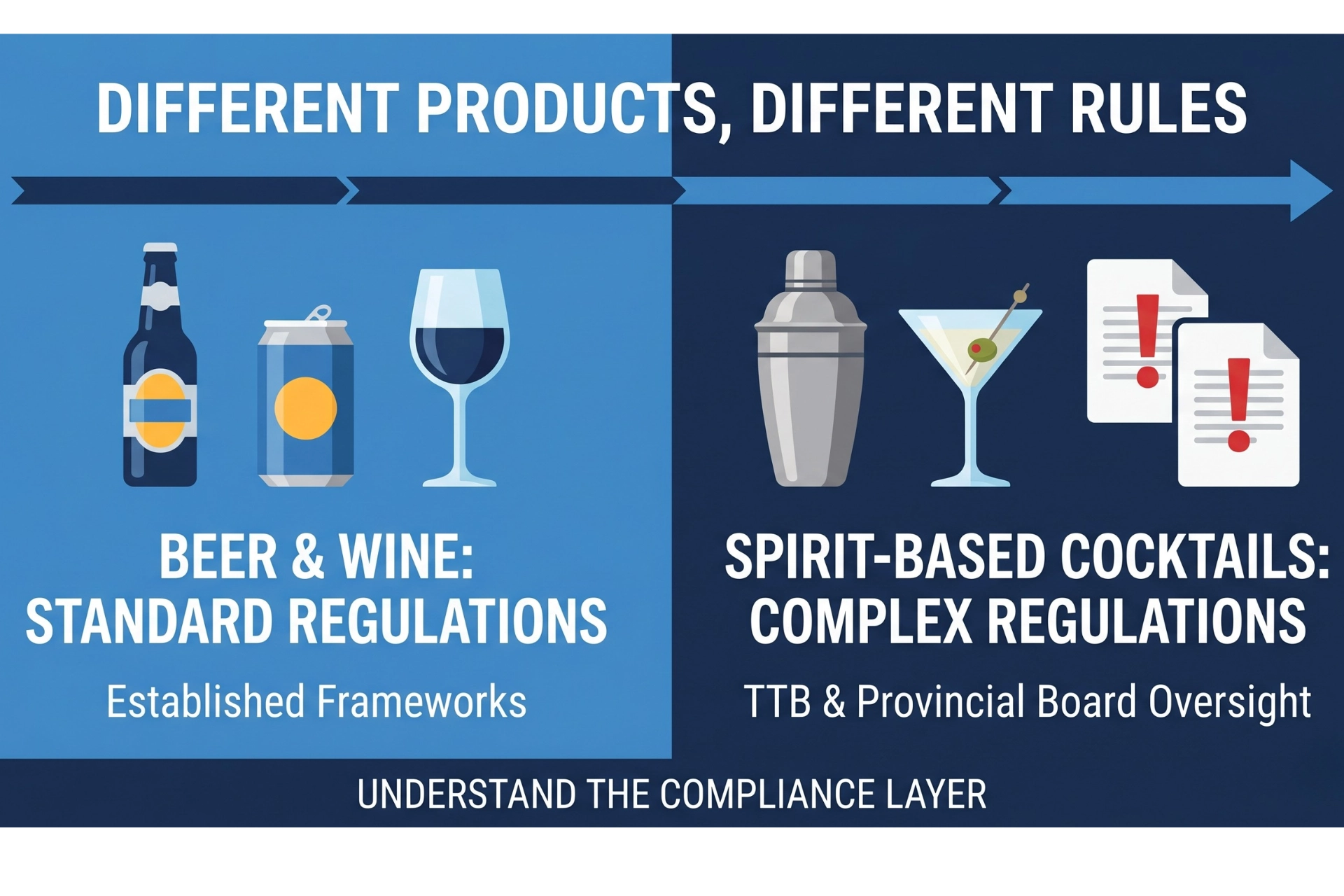
Image Source: Gemini 2026
In this case, working with a logistics partner who knows how to navigate this red tape is a practical necessity. When you ship canned margaritas or cosmopolitans, you need to ensure that every pallet of canned cocktails meets local compliance requirements.
Why Ready-to-Drink Cocktails Need Cold-Chain Shipping
Most canned cocktails are packaged in aluminum cans, which are great for branding but require temperature-sensitivity considerations. Extreme heat can affect carbonation and the balanced flavor of your cocktails. If your canned margarita contains juice or your martini contains dairy, cold-chain shipping becomes critical for those cans.
Brands shipping canned cocktails to southern markets during peak summer especially need temperature-controlled shipping. A refreshing canned margarita or a Cosmopolitan can easily be ruined by thermal shock during a long ship cycle.
Getting Your Canned Cocktail Supply Chain Right From Day One
Early-stage canned cocktail brands often underestimate the complexity of their supply chain. You’re coordinating ingredients, cans, and finished canned cocktails going out to a bar or distributor.
Each of those touchpoints is a logistical event for your canned cocktails.
Ingredient Inbound Logistics
Whether you’re sourcing spirits for cocktails, mix components, or lemon, lime, orange, and grapefruit concentrates for a margarita, your ingredients must arrive in peak condition. A hint of oxidation in your grapefruit or lemon supply can ruin a whole batch of cocktails.
Both dry ingredient shipping and temperature-sensitive freight require careful management to keep your canned cocktails tasting like they were made from scratch. Delays at this stage cascade through your entire production schedule for your canned cocktails.
| A useful tip here: Document your ingredient lead times and build a buffer into your production calendar from day one. Brands that stock key cocktail ingredients with even a short buffer absorb supply chain disruptions without losing a canning run. |
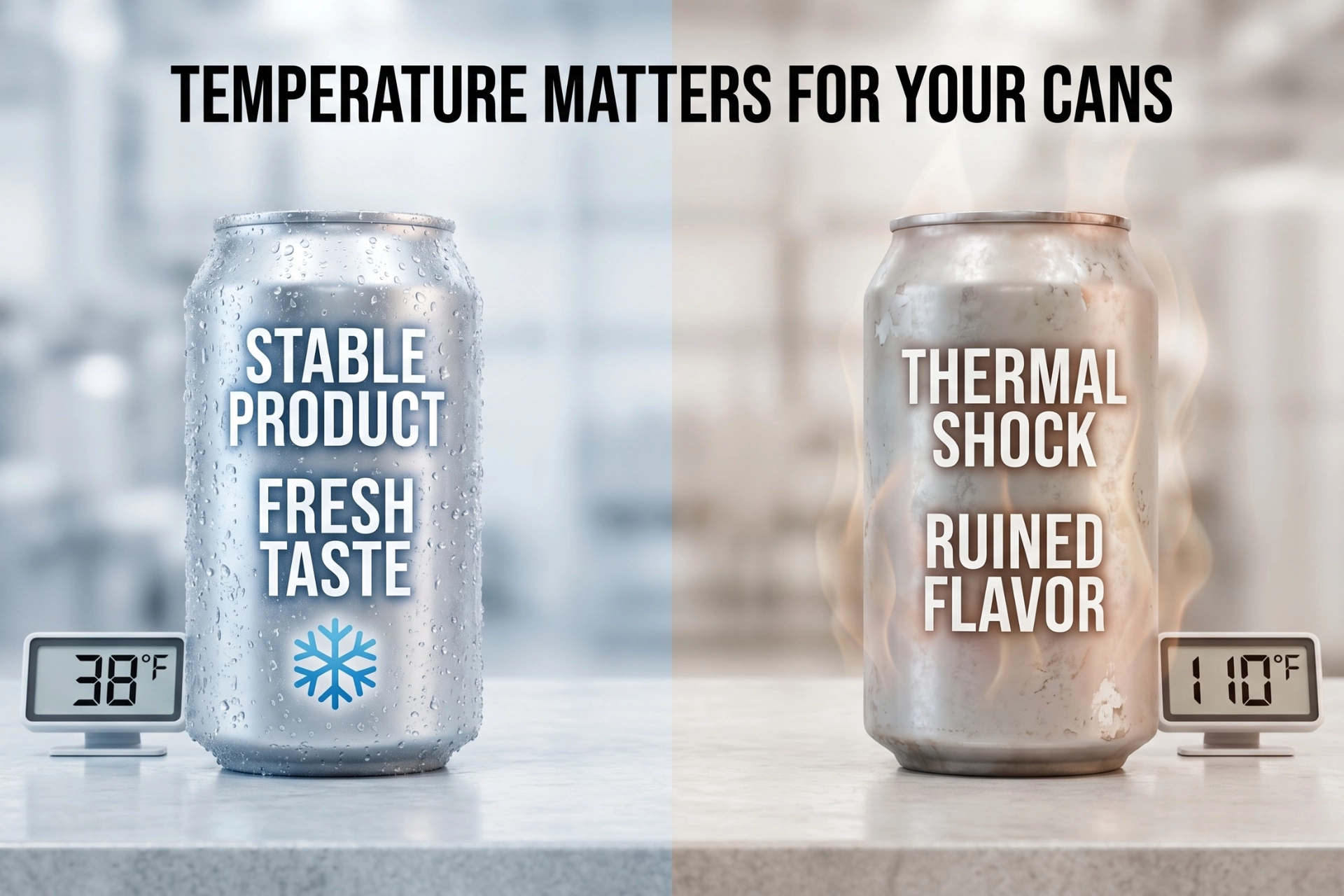
Image Source: Gemini 2026
Canning and Co-Packer Coordination
Many brands use third-party co-packers for their canned cocktails. Getting empty cans and raw materials to the co-packer and then coordinating the pickup of finished canned cocktails requires tight coordination.
If you’re moving these cocktails across jurisdictions, you’re dealing with regulatory considerations for every drink.
Outbound Beverage Shipping
Once your canned cocktails are ready, you must get them to the bar or retail shelf. This involves moving bottles or cans through a cocktail carrier network. Every pour of a canned margarita or martini into a glass should reflect the quality you intended.
Pallet Parka and Cold Chain Shipping for Canned Cocktails
Not every canned cocktails brand requires refrigerated transit, but many benefit from it. A spirit-based canned margarita with lime or a dairy-based martini needs to maintain consistent flavor profiles. This is where the Pallet Parka becomes an essential tool for your cans.
The Pallet Parka is a proprietary insulation system that lets you bypass the expense of reefer transport for your canned cocktails. Using the Pallet Parka keeps your canned beverages at a consistent temperature while cutting shipping costs.
Whether you’re shipping a canned margarita, a whiskey cocktail, or an espresso martini, preserving balanced flavors (keeping the drink refreshing when it hits the rocks) and maintaining product integrity is vital to the brand. The Pallet Parka helps with exactly that.
Scaling Logistics as Your Brand Grows
The setup that works for a couple of hundred cases of canned cocktails will not work at 50,000. As you expand your lineup of cocktails, think about:
- How will you handle demand for your best canned cocktails during the summer?
- What happens if you need empty cans for a margarita run immediately?
- Are your carrier relationships built for shipping canned cocktails across borders?
- Do you have a clear picture of how your distinctive mix of canned cocktails affects freight classification and cost?
It’s a new, complicated industry. But with an outsourced logistics partner managing your shipments, scaling won’t require starting from scratch every time.

Image Source: Pexels
FAQs About Canned Cocktails & Ready-to-Drink Beverages