Table of Contents

9 Tips for Managing the Cost of LTL Shipping
Published Date: 06 August 2026
The cost of LTL shipping depends on weight, density, distance, and freight class. Small mistakes can inflate your bill. Lower LTL freight costs by accurately measuring shipments, consolidating loads, negotiating rates, and choosing a reliable, cost-effective carrier.
An invoice that doesn’t match the quote is one of the fastest ways to blow a shipping budget. Freight class surprises, accessorial fees, and fuel surcharges can send your LTL shipping costs climbing fast.
At Brew Movers, we often see cost creep with beverage clients, and it usually comes down to a few fixable habits. If you’re looking to reduce your LTL freight costs, these tips will help.
How to Reduce LTL Freight Costs
Cutting your LTL freight cost comes down to a handful of habits: accurate measurements, smart packaging, and smarter carrier choices. Here are nine ways to start trimming your bill today.
1. Take Accurate Measurements
Precise shipment information helps you avoid unnecessary charges. Inaccurate weights, dimensions, or the wrong freight class can lead to reweigh or reclassification fees. Verify your weight and measurements before booking to eliminate reclassification costs entirely.
2. Prepare for Pickup
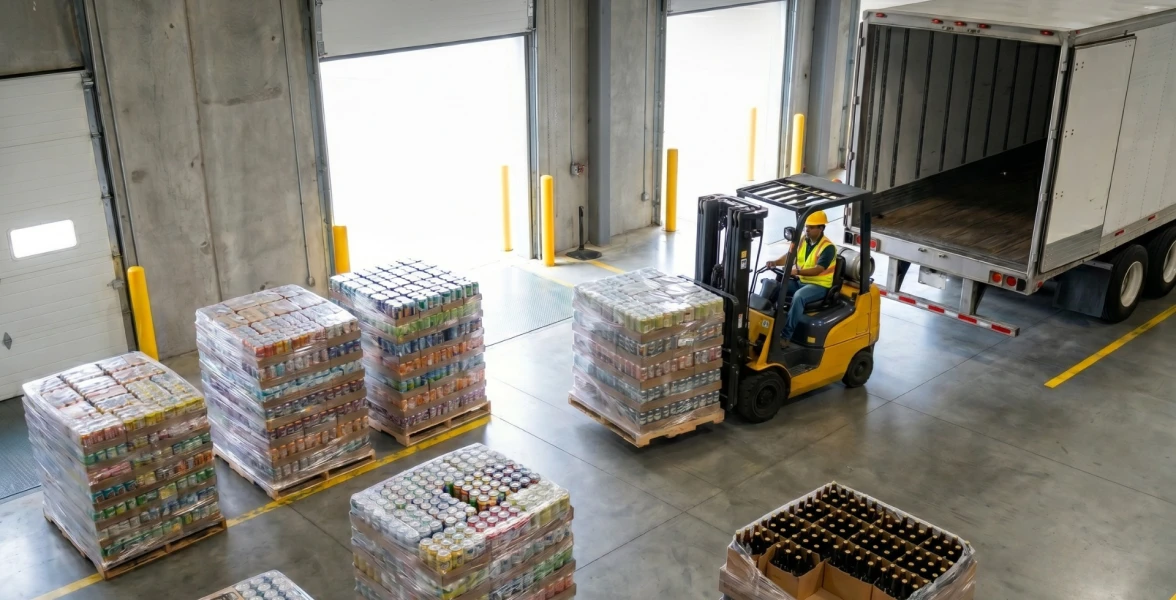
Package perishable beverages properly and make sure your loading dock is ready before the truck arrives. Coordinating with receiving and dispatching staff for smooth loading and drop-off helps you avoid detention and waiting fees.
3. Review Your Bill of Lading
Check your bill of lading before your shipment departs and confirm quantities are accurate. Errors like double entries can lead to added fees or delivery disputes down the line.
4. Use Efficient Packaging
Bulky packaging adds weight and cubic feet without adding value. Efficient, stackable packaging reduces dimensional weight charges and helps you get more out of every pallet, which keeps your LTL shipping costs down.
5. Avoid High-Traffic Times
Rates in the LTL market spike during high-demand periods and holidays. Work with your carrier to find low-traffic days, and reschedule non-urgent shipments around peak season to keep your LTL rates lower.
6. Consolidate Your Shipments
Shipping multiple smaller loads costs more than consolidating shipments into fewer, larger ones. You’ll still owe the carrier’s absolute minimum charge (AMC) either way, so combining orders and stacking dense pallets stretches your budget further.
7. Negotiate Competitive Rates
Ask your logistics provider about volume discounts, guaranteed consistent volume, and competitive rates for regular shippers. Checking a resource like DAT Freight, which publishes freight rate benchmarks by lane, can strengthen your position before your next contract renewal.
8. Arrange for Backhauling
Backhauling lets a truck pick up a load on its return trip instead of driving back empty. Carriers often offer lower rates on backhauls, so ask your provider if backhauling opportunities exist on your shipping lane.
9. Choose a Reliable Carrier with the Right Network
A carrier’s terminal networks, real-time tracking, and track record affect your total cost, not just the quoted rate. Established names like FedEx Freight and Old Dominion are known for consistency, but any LTL carrier you choose should offer transparent pricing and dependable service.

Image Source: Pexels
What Determines Your LTL Freight Cost
Your LTL freight cost comes down to a mix of factors carriers weigh together to land on a final rate:
- Weight: Overall weight has a direct impact. Larger, heavier loads often qualify for a better per‑pound price, yet your final freight charge usually increases as total weight rises.
- Cubic feet and density: Carriers assess the cubic‑foot space your pallet uses and divide it by total weight to determine density. Higher‑density freight typically costs less per pound.
- Distance: Pricing is based on the distance from the pickup point to the delivery location, and longer routes typically incur higher charges for long-haul shipments.
- Freight class: The freight class is determined through the National Motor Freight Classification (NMFC), a standard system based on density, handling requirements, and value. Classes run from 50 to 500, with lower numbers costing less to ship. Most beer is Class 65, a lower-cost class that works in your favor.
- Accessorial charges: Extra fees, such as residential drop-off, liftgate service, inside delivery, and delivery to restricted or limited-access locations (like construction sites), plus fuel surcharges, can add up quickly.
- Absolute minimum charge (AMC): Most carriers set a required minimum per shipment, so your final price never falls below it.
- Base rates and negotiated rates: Base rates reflect the carrier’s standard pricing, based on weight, density, distance, and freight class, while negotiated rates and volume-based discounts gradually lower your LTL costs over time.
Your carrier uses these factors to set a shipping rate that should never drop below the AMC.
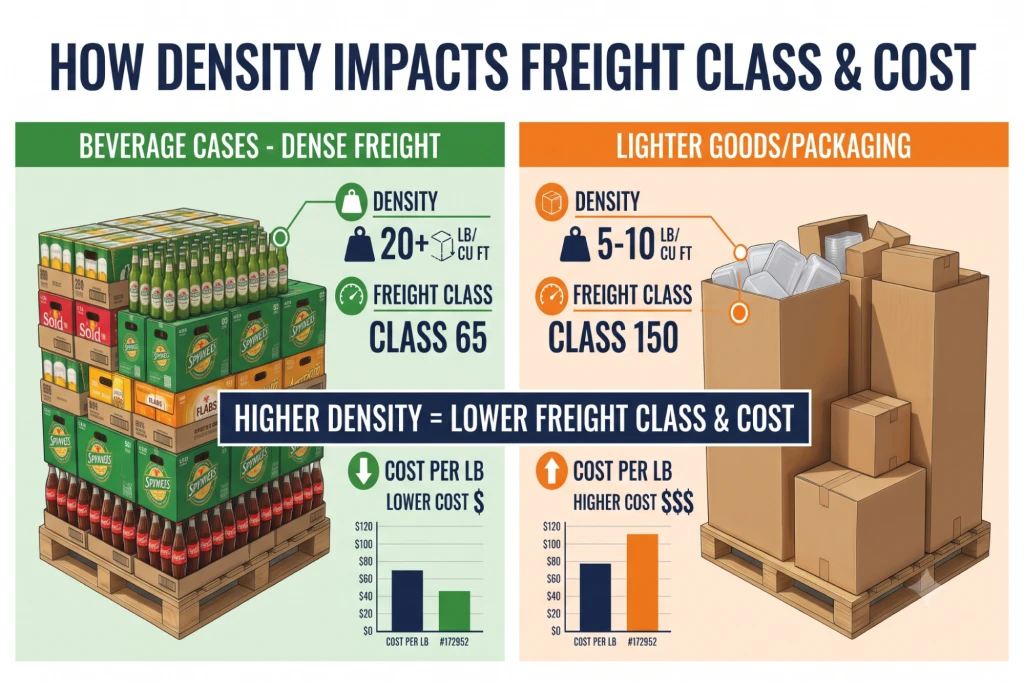
Image Source: Gemini 2026
Calculate Your Freight Density Before You Ship
Since density plays such a big role in your freight class and your LTL shipping costs, it pays to know your numbers before you book. Brew Movers built a free freight density calculator to help estimate your shipment’s density in seconds, so you can spot ways to repack before your carrier does the math for you.
Plug in your total weight and dimensions, and the calculator gives you an estimated freight class range so there are no surprises on your invoice.
FAQs About LTL Freight Shipping